
At Tivarri, sustainability is not a standalone initiative, it’s embedded into how we build and run our business. As a provider of secure, high-performance IT solutions, we understand the environmental cost of operating in an energy-dependent sector. That’s why reducing our energy consumption, and where possible, generating our own, is a key priority.
Over the years, we’ve taken significant steps to reduce our environmental impact across emissions, energy, water, and waste. However, despite sourcing electricity from a supplier with strong renewable credentials, our supply still came from the grid rather than renewable sources.
From insight to implementation
Following a Carbon Survey that highlighted areas for improvement, we moved quickly from planning to implementation, investing in solutions that deliver both environmental and operational benefits.
Our approach focused on four key areas:
-
- Generating our own energy
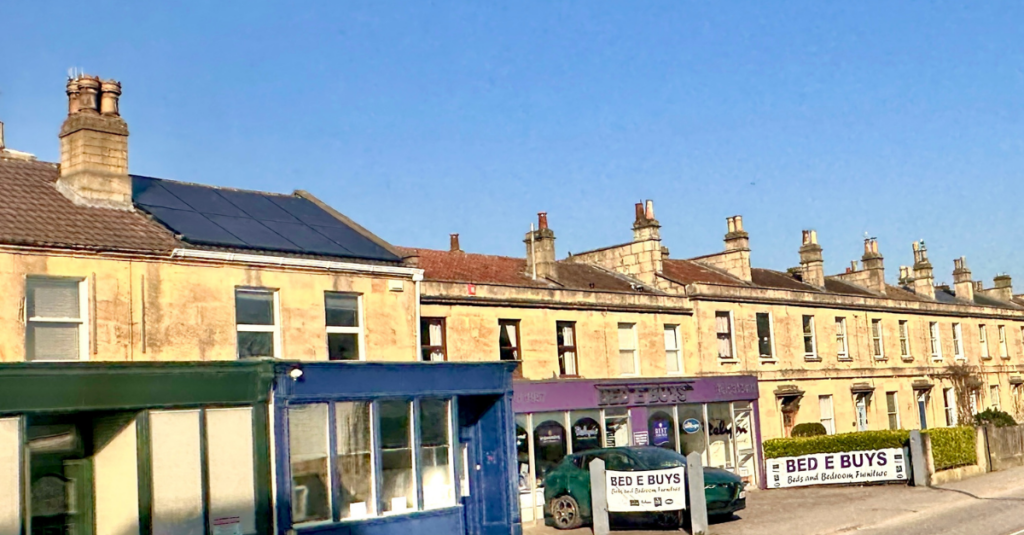
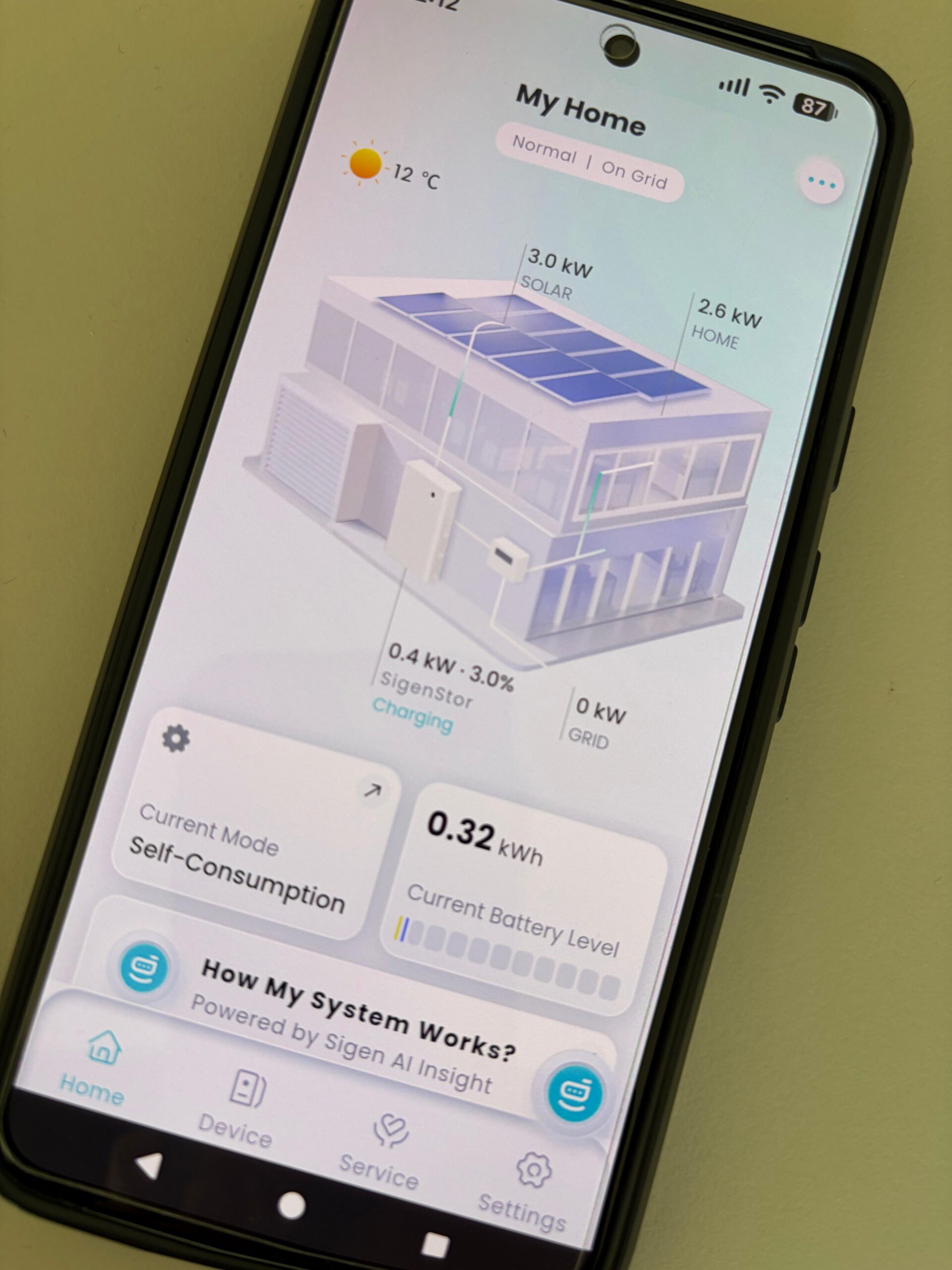
Unlike neighbouring properties, our office is not listed, this simplified the installation of 14 photovoltaic panels on the roof. This enables us to generate renewable electricity on-site. To maximise efficiency, we developed software to monitor energy generation/consumption and make decisions in real time.
- Generating our own energy
-
- Reducing heat loss
Replacing older single-glazed windows with double glazing has improved insulation and reduced the energy required to maintain a comfortable working environment.
- Reducing heat loss
-
- Upgrading heating and cooling systems
We installed an air-to-air heat pump, providing more efficient temperature control across the ground floor.
- Upgrading heating and cooling systems
The results so far
These changes have delivered immediate, measurable results. We’ve reduced our annual energy costs by nearly £1,000 and cut carbon emissions by just under one tonne. During the summer months, our solar setup allows us to operate for much of the working day without relying on grid electricity.
“With the new solar panels fitted, the business is able to operate during business hours in the summer months almost entirely without using electricity from the grid.” – Simon Ponsford, Director
Overall, our energy usage is now roughly half that of a comparable business.
What comes next
We see this as part of a longer-term transition. Further improvements are already under consideration, including an additional heat pump system to cover other areas of our building.
At the same time, we’re leveraging our in-house software expertise to develop more energy-efficient solutions and exploring how battery technology could support greater energy resilience.
Incremental change, lasting impact
Our experience demonstrates that sustainability doesn’t require large-scale, disruptive change. Consistent, well-targeted improvements can deliver significant results.
“Change doesn’t have to be a ‘big fix’. Everyday decisions about energy, sourcing, waste, and innovation accumulate into a significant environmental impact. SMEs such as ours can adapt quickly, experiment with greener practices, and influence supply chains.“– Simon Ponsford, Director
This project was supported by the West of England’s Green Business Grant.
